
Key Takeaways
- Yes, an impacted canine can press against the roots of the teeth beside it and, in some cases, wear them down.
- This wearing away of a tooth root is called root resorption, and it often causes no pain at first.
- Research using 3D scans found that about half of the lateral incisors (the teeth next to the canines) near an impacted canine showed some root resorption.
- 3D imaging can reveal this risk before symptoms appear, and earlier treatment helps protect the rest of the smile.
- Peninsula Oral and Facial Surgery in San Mateo uses 3D imaging to plan impacted canine treatment, and patients can request an appointment for an evaluation.
How an Impacted Canine Can Press Against Neighboring Roots
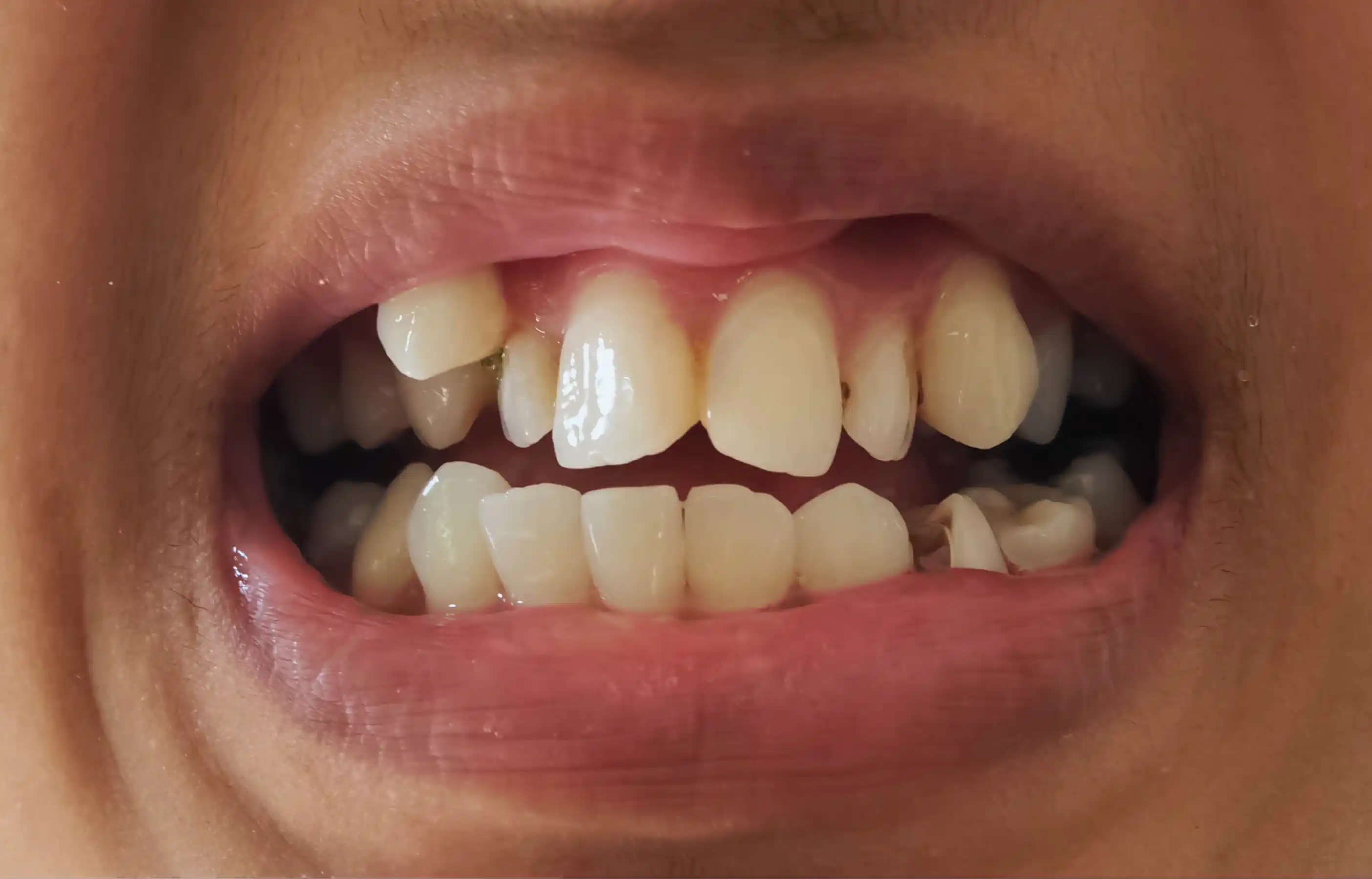
A buried canine does not just sit quietly in the jaw. Because it is stuck in the wrong position, it can push against the roots of the teeth around it. The tooth most often affected is the lateral incisor, which sits right beside the canine. The central incisor and the first premolar can be affected too.
Pressure from the impacted tooth can also shift nearby teeth out of line. Over time, this can lead to gaps, crowding, or a bite that no longer comes together properly. Impacted canine treatment is meant to stop this chain of problems before it grows.
What Root Resorption Is and Why It Matters
Root resorption is when the body slowly breaks down part of a tooth's root. A healthy tooth root holds the tooth firmly in the jawbone. When part of the root is worn away, the tooth can become weaker and, in serious cases, loose.
Root resorption matters for two reasons:
- It often causes no pain or visible change, so a family may not know it is happening.
- Once root structure is lost, it does not grow back.
A systematic review and meta-analysis of studies that used 3D cone beam scans found that about 50 percent of lateral incisors beside an impacted canine showed some root resorption. Results varied a lot from study to study, from about 25 percent to 70 percent, so the true risk depends on each patient's anatomy. The takeaway is not that damage is certain, but that it is common enough to take seriously.
How 3D Imaging Reveals Risk Before Symptoms Appear
Because root damage can be silent, imaging is the best way to catch it. A flat X-ray can hide how close the canine sits to nearby roots. A 3D scan shows the tooth from every angle.
Peninsula Oral and Facial Surgery uses in-house 3D X-ray imaging to map the impacted tooth in three dimensions. This lets the care team:
- See whether the canine is touching a neighboring root
- Spot early signs of root wear
- Choose the safest path for guiding the tooth into place
- Avoid harming healthy teeth during treatment
Why Timing Affects How Much Damage Can Occur
The longer an impacted canine stays in contact with a neighboring root, the more time there is for damage. Age matters too. Dentists recommend regular exams between ages 7 and 12, when an X-ray can show a canine heading in the wrong direction. If the tooth is guided into place early, there is a better chance of protecting the teeth beside it.
| Timing of Care | Typical Situation | Possible Outcome |
|---|---|---|
| Early (ages 7 to 12) | Problem found on a routine X-ray before the tooth is stuck | More options, and braces alone may open enough space |
| Later, still growing | Canine is impacted but can still be moved | Exposure procedure and braces guide the tooth into place |
| Delayed | Tooth may fuse to bone or press on roots for years | Higher risk to nearby teeth, and removal may be needed |
How Treatment Helps Protect Adjacent Teeth
Treatment works by moving the canine out of the way of its neighbors. First, an orthodontist uses braces to open space in the dental arch. Then an oral surgeon gently uncovers the buried tooth and attaches a small bracket and chain. The orthodontist uses the chain to pull the tooth into position, as the American Association of Oral and Maxillofacial Surgeons describes in its overview of the expose and bond procedure.
Once the canine is where it belongs, it no longer presses on the teeth beside it. The result is a healthier bite and a smile that looks and works the way it should. If a tooth has fused to the bone, the plan may involve removal and a dental implant to protect the surrounding teeth.
Protect Your Smile With an Impacted Canine Evaluation in San Mateo
An impacted canine is more than a single stuck tooth. It can affect the roots and position of the teeth around it, which is why a clear plan matters. A 3D evaluation can show whether nearby teeth are at risk and what treatment makes the most sense.
To find out how an impacted canine is affecting a smile, request an appointment with Peninsula Oral and Facial Surgery for a consultation with an experienced oral surgeon in San Mateo.
Frequently Asked Questions
Can an impacted canine damage other teeth?
Yes. An impacted canine can press on the roots of neighboring teeth and cause root resorption. It can also push nearby teeth out of alignment. The risk depends on how close the canine sits to those roots.
What is root resorption in an impacted tooth?
Root resorption is when the body breaks down part of a tooth root. With an impacted canine, this can happen to a neighboring tooth because of ongoing pressure. It often does not hurt at first, which is why imaging is so useful.
How common is root damage next to an impacted canine?
Studies vary. A review of 3D scan research found that about half of lateral incisors beside an impacted canine had some root resorption. Many cases were mild, but the numbers show why early evaluation is a good idea.
Will I feel pain if an impacted canine is hurting my other teeth?
Often not. Root damage can develop without pain, which is why dentists rely on X-rays and 3D scans rather than symptoms alone.
Can early treatment protect the teeth next to an impacted canine?
Early treatment gives the best chance. Moving the canine into its proper place takes pressure off nearby roots and helps keep the rest of the smile stable.
Who treats an impacted canine in San Mateo?
An orthodontist and an oral surgeon usually work together. Peninsula Oral and Facial Surgery partners with local dentists and orthodontists to diagnose and treat impacted canines.
